today’s question is
Original Music vs. Stock Music for Brand Videos: How to Choose
Music carries half the emotion of a video. Yet it is often the last decision, made in a hurry from a stock library. Here is how to decide between a stock track and music written for you.
the short answer!
in short
Stock music is the right choice for quick, low-stakes content on a tight timeline: it is affordable and ready now, but other brands can use the same track. Original music costs more and takes longer, but it is written to fit your edit, your emotion and your brand, nobody else can use it, and it can become part of a recognisable sonic identity. Many brands mix both: original music for flagship films and events, stock for everyday social posts.
● Sonic identity · 01/05
The quick comparison
| Stock music | Original music | |
|---|---|---|
| Cost | Low, often a single licence or subscription | Higher, quoted per project |
| Speed | Immediate | Days to weeks |
| Exclusivity | None: anyone can license the same track | Yours, according to the agreed rights |
| Fit with the edit | You cut the video to the music | The music is written to the video |
| Brand recognition | Hard to build | Can become a sonic identity |
| Rights surprises | Possible (platform claims, licence limits) | Clear terms from the start |
● Sonic identity · 02/05
When stock music makes sense
- Short social posts that live for a few days.
- Internal videos and quick updates.
- Tight deadlines where nothing else is possible.
- Tests and drafts, before a final version is produced.
If you use stock music, read the licence carefully: where you may use it (web, broadcast, events, paid ads), for how long and in how many projects. Popular tracks are also used by many other brands, sometimes your competitors.
● Sonic identity · 03/05
When original music is worth it
- Flagship films: brand films, donor and fundraising films, documentaries. These videos live for years and carry your reputation.
- Events: openings, award walk-ons, sponsor loops. Original music makes a room feel like it belongs to you.
- Campaigns that run across video, radio, social and events, where one musical idea ties everything together.
- Emotional stories where the music has to rise, fall and land exactly with the picture.
● Sonic identity · 04/05
What "written for your video" really means
With stock music, editors cut the film to fit a track that was made for no one in particular. With original music, the composer works from the edit: the music swells when the speaker pauses, drops away under an important line and resolves on the final frame. The result feels effortless, because nothing is fighting.
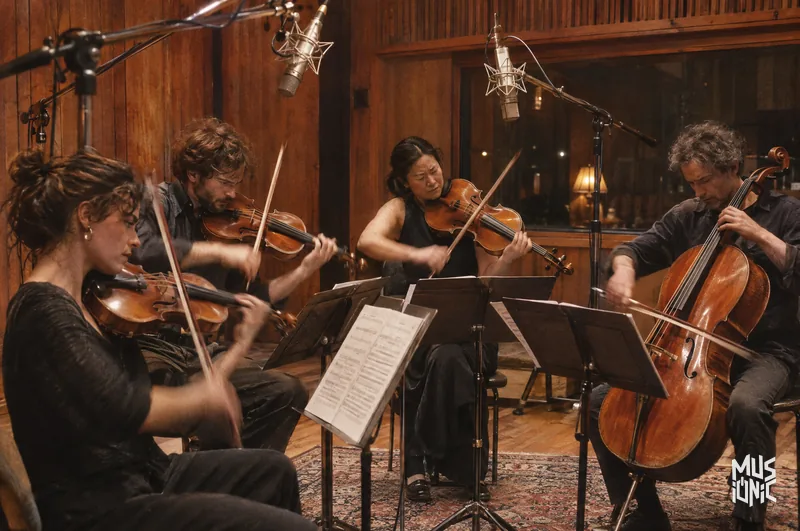
At Musionic, the music and the film are made in the same studio. Our composers and editors work side by side, so the score and the cut evolve together, and the same musical idea can come back in your next video, your event and your sonic logo.
● Sonic identity · 05/05
A practical middle path
You do not need to choose one approach forever. A common plan is to commission one original brand theme, then have it arranged in several versions (short, long, calm, energetic, with or without a sonic logo at the end). Your team gets a small library of music that is truly yours, ready for most videos, and stock music stays for the quick, everyday posts.
people also ask…
Questions people ask
Is original music much more expensive than stock music?
It costs more than a single stock licence, but less than many expect, especially when one brand theme is arranged into several versions you can reuse. Every project is quoted on its own.
Who owns the original music?
It depends on the agreement. Rights can range from an exclusive licence for your use to a full buyout. The important thing is to agree on it clearly before the work starts.
Can stock music cause problems on YouTube?
Sometimes. Some library tracks are registered with content identification systems, which can trigger claims on your videos even when you hold a licence. They can usually be cleared, but it takes time.
How long does it take to compose music for a video?
For a single brand video, often one to three weeks including revisions, depending on length, instruments and how early the composer joins the project.